











I Blew My First $500 on Ads in a Weekend — Here’s How to Actually Make Your Campaigns Work
If you’ve ever stared at a Google Ads dashboard wondering why nobody’s clicking, or felt that sinking feeling watching Facebook spend your budget with zero sales, I get it. Managing digital ad campaigns isn’t about luck or throwing money at the screen — it’s a skill you learn through a mix of curiosity, data obsession, and a few humble pie moments. I’m going to walk you through the real stuff that turns confusing metrics into money-making campaigns, no jargon overload.
When I first tried to figure out how to manage digital ad campaigns, I did everything wrong. I had one ad set, a generic stock photo, and the brilliant idea to target “everyone ages 18–65 interested in shopping.” After 48 hours, my budget was gone and my only conversion was my mom clicking through because I texted her the link. That’s when I realized — you can’t just “set and forget.” You need to understand performance from the ground up, and that starts with the right ad campaign performance analysis tools. I’m not talking about pricey enterprise suites; Google Ads has its built-in reports, and Facebook’s Ads Manager gives you more data than you’ll know what to do with at first. But the trick is knowing which numbers to look at.
Before you even think about optimization, you need to get comfortable with digital advertising metrics explained in plain English. Impressions? That’s just how many times your ad was shown. Reach is how many unique people saw it. Clicks are self-explanatory, but the metric that made everything click for me was click-through rate (CTR) — if your CTR is below 1%, your ad isn’t resonating. Then there’s cost per click (CPC) and, the ultimate north star, return on ad spend (ROAS). When you learn to track ad campaign performance metrics like these, you stop guessing and start seeing a story. A high CTR but low conversion rate? Your landing page might be the culprit. A low CTR? Your creative or audience targeting is off.
Let’s talk about Google Ads specifically, because I’ve spent more time there than I care to admit. One of my favorite google ads campaign optimization tips is to get ruthless with search terms. Not keywords — search terms. You’ll find people typing in things that are close but totally wrong, and those wasted clicks add up fast. Add them as negative keywords and watch your spend become more efficient. Another game-changer: pause underperforming keywords instead of letting them drain your budget. Oh, and ad extensions — they’re free real estate. Use sitelinks, callouts, and structured snippets to make your ad take up more space and give people more reasons to click. That alone can boost CTR by a few percentage points, and it takes five minutes.
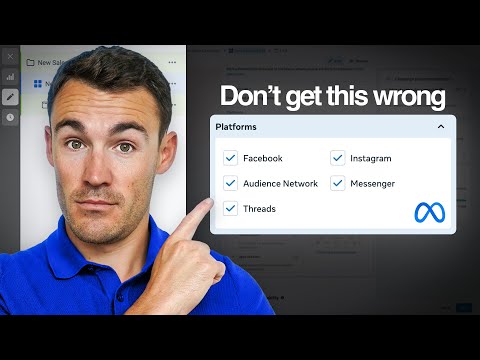
On the Facebook side, a solid facebook ad campaign strategy isn’t about boosting posts at random. It’s about understanding how the algorithm learns. Facebook’s delivery system optimizes for the objective you choose, so pick it carefully. If you want purchases, select conversions, not traffic. I also learned to structure my account with a clear testing framework: one campaign for prospecting new audiences, another for retargeting people who visited but didn’t buy, and a third for testing new creatives. Creative fatigue is real — if the same ad has been running for two months, your audience is probably scrolling past it. Use facebook ads performance reporting to see frequency metrics; when your average user sees the same ad more than 3–4 times, it’s time to refresh the imagery or copy.
Once you’ve got campaigns running across platforms, the real power move is learning to analyze ad campaign data in one place. I used to jump between tabs frantically, until I started using a simple spreadsheet and Google Data Studio (now Looker Studio) to pull everything together. You connect your ad accounts and suddenly you can see how a Facebook prospecting campaign feeds into a Google remarketing sequence. That holistic view is how you improve ad campaign roi, because you stop optimizing in silos. Maybe your Facebook ads have a high CPA but they’re driving a ton of assisted conversions on Google, making them worth more than a last-click attribution model shows.
For anyone just starting out, consider this your tiny, no-pressure ad campaign management guide for beginners. First, master one platform before you add another. I’d say start with Google Ads if you sell something people actively search for, or Facebook if your product is more visual and impulse-driven. Second, set up conversion tracking immediately. Without it, you’re flying blind. On Google, that means installing the global site tag and conversion linker; on Facebook, the pixel. Third, give campaigns time to exit the learning phase — at least 3–4 days and 50 conversion events, ideally — before making changes. I used to tweak things every hour and then wonder why performance was all over the place. The algorithm needs stability.
As you get more confident, you’ll develop your own rhythm. I do a quick daily check on top-line spend and conversions, but my serious analysis happens weekly. I pull up facebook ads performance reporting alongside Google Ads reports and ask: which audiences are yielding the best ROAS? Which ads have the highest engagement? Where is my cost per acquisition creeping up? These questions lead to action — pausing the wasteful stuff, scaling the winners by increasing budget slowly (20–30% at a time), and always, always testing something new. Whether it’s a different headline, a video instead of an image, or a lookalike audience, the testing never stops.
Something I wish I’d understood earlier is that digital advertising isn’t magic, it’s a feedback loop. You put a message in front of someone, they act or they don’t, and the data tells you why. So don’t be afraid of bad numbers — they’re just clues. And when you start to track ad campaign performance metrics with curiosity instead of dread, the whole process becomes kind of fun. You’ll find yourself saying things like, “Oh, sweet, my CTR went up 0.3% after changing the button color!” — and meaning it.
So, if a friend asked me tomorrow how to get started, I’d tell them: pick one goal, set up proper tracking, and watch the early data like a hawk. The fancy ad campaign performance analysis tools are nice, but your brain is the best tool you’ve got. Learn the numbers, trust what they tell you, and don’t be afraid to kill your darlings — sometimes even the ad you love just doesn’t convert. That’s okay. The next one will.