









The Secret to a Good Hair Day Isn’t Your Shampoo—It’s What You Plug In
Most of us spend way too long blaming frizz on the humidity or a shampoo that stopped working, when the real magic (and the real damage) happens after you step out of the shower. The truth is, learning to actually use your hair dryers and styling tools properly is the single biggest glow-up you can give your hair without a salon appointment.
I used to think a good blowout was pure sorcery. You know the kind—the glossy, bouncy hair that swings like a shampoo commercial. My version? A poofy, half-damp mess with a kink in the back from the round brush I couldn't figure out. I’d watch tutorials and somehow end up with the brush tangled so badly I’d have to cut a chunk out. So I’d just give up and let it air-dry, then wonder why my ends felt like straw. That is, until a friend who actually went to cosmetology school sat me down and explained that it’s not about having expensive stuff—it’s about matching the tool to what you want your hair to do, and knowing the little tricks nobody writes on the box.
Here’s the thing about hair dryers: most people treat them like a one-size-fits-all noise machine you just blast until things feel warm. But if you look at the back of your dryer, you’ll see a removable filter—if that’s clogged with lint, you’re literally suffocating the motor. Cleaning that thing once a month gives you more power and less heat damage because the air doesn’t have to work as hard. Similarly, that thin, flat nozzle you probably tossed in a drawer? That’s not a random attachment; it’s a concentrator, and it’s the reason salon blowouts look sleek instead of puffy. The narrow slot directs air down the hair cuticle, smoothing the outer layer flat, so light reflects off it. I started using mine religiously on the rough-dry until my hair was about 80% dry, then I’d switch to a round brush to shape the ends. Suddenly, my blowout lasted three days and looked like I’d paid someone fifty bucks. No joke.
I also realized that not all dryers are made equal, and you don’t need a $400 model to get great results. What you do need is to understand the technology a bit. A lot of affordable hair dryers and styling tools now use ionic or tourmaline tech, which basically means they emit negative ions to break down water droplets faster and seal the hair’s cuticle. That reduces frizz and cuts drying time dramatically. If your hair is thick and prone to poufiness, an ionic dryer is a game changer. If your hair is fine and tends to go limp, a dryer with a cool shot button and multiple heat settings is more important so you can set your style without frying it. The cool shot is the thing I ignored for years—now I know it’s like a setting spray for your hair, closing the cuticle down and locking the shape.
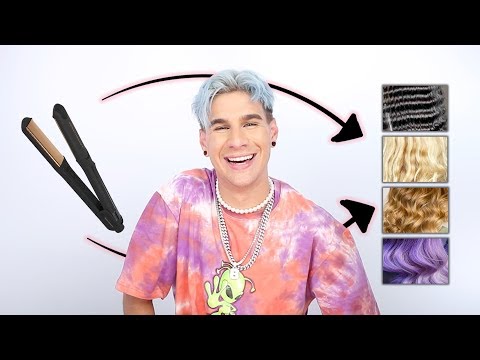
And let’s talk about the rest of the crew, because hair dryers and styling tools are a whole little family. Flat irons, curling wands, hot air brushes—each one has its own personality. I went through three cheap curling wands before someone told me that the barrel material matters way more than the price tag. Ceramic distributes heat evenly and is gentler, titanium heats up faster and gets super hot, which is great for coarse, stubborn hair but can overcook fine hair if you’re not careful. Tourmaline adds that extra negative-ion oomph for shine. So I finally got a tourmaline-ceramic wand with a digital temperature display and it changed everything. My curls lasted through a humid summer wedding, no hairspray crustiness required.
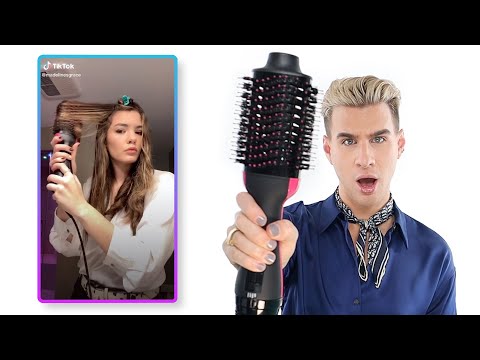
One tool I never expected to love: a hot air brush. It looks like a chunky round brush with a dryer built in, and for the longest time I thought they were a gimmick for people with perfect hair already. Then my neighbor, who has arthritis and can’t juggle a separate brush and dryer, showed me her morning routine. She gets a smooth, voluminous blowout in one hand, no sectioning clips, no awkward wrist angles. If you struggle with coordination or just want a fast everyday style, a hot air brush can be a revelation. The key is to use it on hair that’s about 70% dry; starting from soaking wet just stretches and damages the hair. And you don’t wrap the hair around it like a curling iron—you glide it from root to tip, turning the brush at the ends for a slight bend. Took me three tries to get it right, but now I’m a convert.
Heat protectant is non-negotiable no matter which of your hair dryers and styling tools you’re reaching for. I used to think it was a marketing ploy until I saw a split-end under a microscope compared to a strand that had been protected. The unprotected one looked like frayed rope. You don’t need to drench your hair; a light mist or a few pumps of a cream on the mid-lengths and ends is enough. And please, don’t use it on dirty hair—the buildup basically cooks onto your strands. Start with freshly washed, conditioned hair, towel-dry gently (rubbing creates frizz before you even start), and apply the protectant before any heat touches it.
One more thing I wish I’d known earlier: your sectioning clips are just as important as your tools. Dividing your hair into manageable sections—nape, crown, sides—means you’re not blasting the same piece over and over while the underneath stays damp. When I finally started clipping up the top layer and drying the bottom first, my blowout time dropped from twenty minutes to twelve, and the result was much more even. It’s one of those tiny habits that tricks you into looking like you have your life together.
There’s also a sweet spot with temperature. The highest setting is rarely your friend. Medium heat with a strong airflow gets the job done with way less surface damage. If your hair ever smells faintly burnt despite being clean, your tool is probably too hot. I’ve started setting my flat iron to 350°F instead of cranking it to 400, and my ends feel smoother after weeks of consistent use.
I still have days where I just throw my hair into a claw clip, and that’s fine too. But knowing the real power of my hair dryers and styling tools means I’m not at the mercy of random humidity or a bad cut. When I want to feel pulled together, I don’t need a salon. I just need a clean dryer filter, a good round brush, and the patience to section my hair like I mean it. And honestly, that’s the kind of adulting win that never gets old.