








Ditch the Wall Hugger Life: Your Friendly Guide to Power Banks and Wireless Chargers That Actually Make Sense
Ever found yourself nervously eyeing that 5% battery icon while you’re out and about with no outlet in sight? I’ve been there more times than I’d like to admit. Power banks and wireless chargers have completely changed how I keep my phone alive, but only after I stopped buying random gadgets and actually learned what makes them tick. If you want to know how to charge phone without outlet drama, pick something that works for travel, and stop second-guessing all the tech jargon, you’re in the right place.
Let’s rewind to a moment that still makes me cringe. I was on a long-haul flight, convinced my fully charged phone would last through movies, messages, and my boarding pass app. An hour before landing, the battery hit 2%. I had no adapter, no backup, and the plane’s USB port was broken. That’s when I realized that understanding how to charge phone without outlet access is a survival skill, not a luxury. Since then, I’ve tested more gadgets than I can count, and I promise you don’t need to be an engineer to get this stuff right.
First up: power bank capacity explained the way your friend would explain it, not a spec sheet. When you see a power bank labeled 10,000mAh, that doesn’t mean it’ll give your phone exactly 10,000mAh. There’s always energy lost to heat and voltage conversion — usually around 60-70% efficiency. So a 10,000mAh pack might deliver about 6,000-7,000mAh of usable charge. For an iPhone 15 (around 3,349mAh battery), you’ll get roughly two full charges. An Android phone with a 5,000mAh battery might get one and a half. That’s the real talk you need when you choose power bank for daily life or travel. Don’t just grab the one with the biggest number; think about how many full top-ups you actually need between wall outlets.
Which brings me to the best portable charger travel situation. Look for something compact but with enough juice for a couple of full phone recharges. I swear by slim 10,000mAh models with built-in cables — one less thing to lose in your bag. If you’re bouncing between cities, get one that supports fast charging for both your phone and the power bank itself. There’s nothing worse than a power bank that takes seven hours to refill. Many newer ones support USB-C input/output, so you can top them up quickly before your next flight. And yes, you can absolutely test power bank speeds with a simple setup: note the percentage increase on your phone over 30 minutes of charging. If a power bank claims to be 20W fast charge, it should push an iPhone from 0 to around 50% in half an hour. Trust but verify.
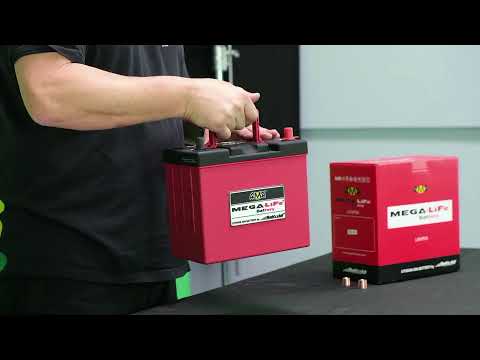
Now, about flying: power bank safe airplane rules are a must-know if you don’t want your favorite charger confiscated at security. The TSA and most global regulators say power banks must go in your carry-on, never checked luggage. They also limit capacity to 100 watt-hours (Wh) without airline approval. A quick conversion: for a typical 3.7-volt lithium battery, mAh divided by 1,000 times 3.7 gives you Wh. So a 27,000mAh power bank is 100Wh exactly. Most 20,000mAh models are around 74Wh, well within limits. I’ve flown dozens of times with a 20,000mAh in my backpack and never had an issue — just keep it easily accessible for security checks. Nobody wants to dig through their bag while people sigh behind them.
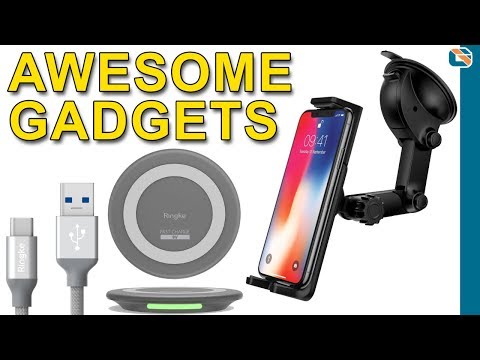
Now let’s flip to wireless charging, because wires are so last decade. I was skeptical at first. I mean, how does a wireless charger working without any physical connection? It’s induction: the charging pad has a coil that creates an electromagnetic field, and your phone has a matching coil that picks it up and converts it back to electricity. Simple in theory, but in practice placement matters. If you’ve ever woken up to a dead phone because it was one centimeter off the sweet spot, you know the pain. Quality wireless chargers now use alignment guides or magnets to fix that. Speaking of which, the magsafe vs wireless charger debate is everywhere. MagSafe is Apple’s magnetized take on Qi wireless charging. It snaps perfectly to iPhone 12 and later models, and it can charge faster — up to 15W on iPhones (vs 7.5W generic Qi). For Android, similar magnetic solutions exist, but the real magic is in the secure attachment. If you use a MagSafe power bank, it clicks onto the back and stays there while you walk, message, or doom-scroll. A regular wireless charger just sits on a desk. So when you choose power bank with MagSafe, you’re choosing convenience on the go, but you lose the universal compatibility of a standard Qi pad that works for power bank iphone android across brands. Both can coexist: I keep a MagSafe battery pack for my iPhone in my bag and a plain Qi pad on my nightstand for any visitor’s phone.
Wireless charging vs cable efficiency is another thing friends always ask me about. Cables still win for speed and less heat. A wired 20W charger will top up faster than any wireless pad, and there’s no energy lost to alignment issues. But honestly, I’ve traded a bit of speed for the sheer laziness of placing my phone on a pad at my desk without fumbling for a cable. For travel, I prioritize cables for quick boosts and use a wireless power bank as a trickle charge when I’m at a café. You can incorporate both worlds: many power banks now have a USB-C port and a Qi charging top, so you can charge phone without outlet by just plonking a device on top, or plug in when you need speed.
When you’re hunting for the best portable charger travel companion, consider one that doubles as a wall adapter. Some models plug directly into an outlet to recharge themselves and also have a built-in cable, so you don’t need extra bricks. That’s a game changer for light packers. Also, if you’re always with a friend, a power bank with two outputs means you can charge phone without outlet for both of you from one pack. Always test power bank with your own cables before a trip — a loose USB-C port can ruin your day.
One more thing: power bank capacity explained wouldn’t be complete without mentioning that cold weather and age reduce capacity. If your old power bank barely gives one charge, it’s not broken, it’s just tired. Lithium batteries lose about 20% capacity after 300-500 cycles. So if you’ve had that chunky brick for three years and it used to charge your phone three times, now it might only do two. Time to upgrade. And please, recycle the old one at an electronics store.
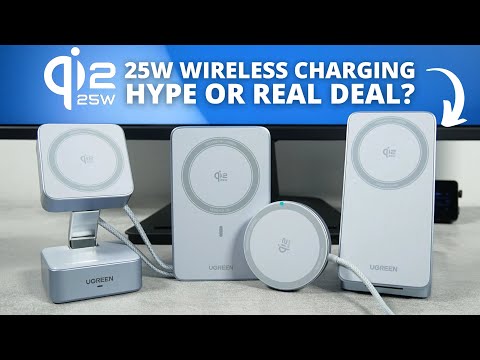
If you’re deep into the Apple ecosystem, MagSafe vs wireless charger isn’t just about magnets; it’s about integration. A MagSafe charger will automatically trigger StandBy mode on your iPhone, turning it into a smart display. A generic Qi charger won’t. Little things like that can make your daily routine feel smoother. For Android users, some phones now support faster 15W Qi2 wireless charging that’s basically MagSafe-like, so the gap is narrowing. When you choose power bank, look for the Qi2 certification if you want future-proof magnetic alignment for any phone.
The bottom line? Don’t overthink it, but don’t undershop either. A good setup can be a slim 10,000mAh wired power bank for emergencies plus a magnetic wireless battery pack for your specific phone. You’ll never have to frantically search for a cafe with outlets again. Grab one that matches your daily rhythm, learn its real-world capacity, and you’ll be that friend who always has power when someone else’s phone is on 1%. And honestly, that feels pretty heroic.