










Your Balcony Could Be a Mini Farm—Here’s How to Make It Happen Without Losing Your Mind
You’ve got a little patch of outdoor space, a few pots, and a secret daydream about snipping fresh basil for your pasta or watching cherry tomatoes ripen in the sun. The idea of urban farming at home sounds romantic, but then you glance at your tiny balcony and think, “Where would I even start?” You’re not alone. I’ve been there, surrounded by droopy supermarket herbs and a watering can with a mind of its own. The good news? Balcony agriculture is way more forgiving than you’d expect, and it doesn’t require a green thumb—just a bit of curiosity and a willingness to treat your outdoor square footage like a tiny edible experiment.
So, how to start a balcony garden without overcomplicating things? First, let’s ditch the pressure. You’re not running a commercial farm; you’re creating a little living pantry that fits your life. The most important thing is to observe your space. Spend a day watching how the sun moves across your balcony. Does it bake in direct light all afternoon, or is it more of a gentle morning glow? That single detail will unlock almost everything else because sun-loving plants like tomatoes and peppers will sulk in deep shade, while leafy greens might bolt in scorching heat. I once stuck a pot of basil in a dim corner and wondered why it grew tall and leggy, like a teenager in a dark room stretching toward a window. Lesson learned: match the plant to the light, and you’ve already done the hardest part.
If you’re diving into urban farming for beginners, start with crops that forgive rookie mistakes. Leafy greens like lettuce, arugula, and spinach are genius—they grow fast, thrive in medium-sized pots, and you can harvest them leaf by leaf instead of waiting for a whole head. Radishes are the speed demons of the root vegetable world, giving you that “I grew something!” thrill in under a month. And herbs? They’re the ultimate confidence builders. Mint, chives, and parsley are so resilient they’ll push through benign neglect, though honestly, mint should come with a warning label because it’ll colonize any container you put it in. Keep it in its own pot, or you’ll be pulling mint runners out of your rosemary for eternity.
When you’re ready to elevate your small space vegetable gardening game, think vertically. A blank wall or railing is actually a canvas. Vertical gardening for small spaces can be as simple as hanging shoe organizers with soil-filled pockets for shallow-rooted herbs and strawberries, or stacking tiered plant stands that let each level drink in light. I once repurposed an old wooden ladder, placing pots on the steps so my basil, thyme, and oregano formed a fragrant staircase. It turned a cluttered corner into a focal point and suddenly my growing area doubled without stealing floor space. Little tricks like that are the heartbeat of balcony vegetable garden ideas—they make a cramped balcony feel abundant instead of chaotic.
Now, let’s talk containers because they can make or break your urban farming mojo. Container gardening tips that actually matter: always, always use pots with drainage holes. I’ve drowned more plants than I’d like to admit by assuming a layer of gravel at the bottom would compensate. It doesn’t. Roots need oxygen, and waterlogged soil suffocates them. Terracotta pots breathe beautifully but dry out fast in the sun, while plastic and glazed ceramic hold moisture longer—great for thirsty plants, terrible for succulents. For leafy veggies and herbs, pick pots at least 6-8 inches deep; for tomatoes and eggplants, go deeper, around 12-18 inches. Also, don’t underestimate the power of good potting mix. Garden soil from the ground compacts into concrete in containers. Get a light, organic potting mix and amend it with compost. That’s your secret sauce for happy roots.
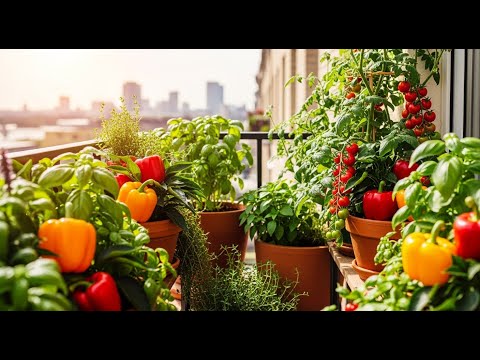
One of the best plants for balcony garden success is the humble bush variety cucumber or tomato, because they don’t need towering supports and they produce heavily in a modest footprint. Cherry tomatoes like ‘Tiny Tim’ or ‘Patio Choice Yellow’ will happily fruit in a 5-gallon bucket on a sunny ledge. Dwarf beans are another gem—they push out clusters of pods without demanding a trellis, and you can tuck them between ornamentals for a sneaky harvest. Even peppers thrive in containers, especially the compact hot pepper types that double as décor with their bright red and orange fruits. And don’t forget edible flowers like nasturtiums. They sprawl casually over pot edges, their leaves and blooms have a peppery kick, and they lure pollinators to your tiny slice of paradise. If you want to grow vegetables on balcony railings, trailing varieties like cherry tomatoes in hanging baskets can spill downward, giving you waist-level snacking and freeing the floor below.
Here’s the thing about urban agriculture how to: it’s not just about production, it’s about rhythm. You’ll learn to water mindfully—poking your finger an inch into the soil to check moisture rather than sticking to a rigid schedule. You’ll discover that a south-facing balcony in July is a micro-desert that needs watering twice a day, while a shaded east-facing one might only need it every couple of days. Feeding your plants doesn’t have to be complicated; an organic liquid fertilizer diluted to half strength every two weeks during the growing season does wonders. I like to imagine my balcony garden as a little community where the basil shares a pot with a marigold friend, the marigold repelling pests, and the whole setup smelling like an Italian summer evening.
What surprises people most about urban farming at home is how it changes your relationship with food. That first time you harvest a handful of rocket for your sandwich, or watch a bee fumble drunkenly through your tiny strawberry blossoms, you realize this isn’t just about produce. It’s about rewilding a concrete corner with life. You’ll start saving kitchen scraps for compost, eyeing yogurt tubs as potential planters, and talking to your neighbors about their own balcony vegetable garden ideas. Soon, you’ll be the person gifting extra mint cuttings and trading homegrown chili flakes. And you’ll absolutely become that friend who says, “Oh, this salad? Just picked from my balcony.” It’s the best kind of insufferable, I promise.
If you’re still unsure how to start a balcony garden, just begin with one pot. A single basil plant on a sunny windowsill is the gateway. Let that success build, then add a lettuce container, a vertical pocket of strawberries, a trellis of peas. Before you know it, you’ll be giving someone else urban farming for beginners advice. The journey never demands perfection; it just asks that you pay attention and celebrate every tiny leaf. Your balcony is already a stage—now it’s ready to play host to the best kind of edible performance.