










The Secret Lives of Cardboard: Why Trading Cards and Board Games Are Your New Best Friends
Look, I get it. Your evenings are probably a blur of streaming services and doom-scrolling. But there’s a whole world of tactile, social magic sitting on shelves just waiting to be cracked open. Whether it’s the satisfying flick of a booster pack or the heavy clatter of wooden meeples on a board, these hobbies aren’t just games—they’re portals to instant communities, strategic rabbit holes, and the kind of nostalgia that smells like ink and shrink-wrap. Here’s the thing: I’ve been deep in both worlds for over two decades, and I’m telling you, there’s never been a better time to dive in.
I started with Pokémon cards back in the schoolyard, where the concrete ground was our playing table and a holographic Charizard was basically a down payment on a house. Back then, we didn’t know anything about card grading or meta decks; we just knew that the crackle of a foil pack was pure dopamine. Now, that same thrill has evolved into a full-blown culture. You walk into a local game store these days, and you’ll see kids and grandparents alike huddled over binders, trading everything from Magic: The Gathering to Disney Lorcana. There’s this unspoken rule that if you pull a rare card, the whole table has to pause and acknowledge it. It’s like the room holds its breath for a second. And you know what? That communal gasp is free therapy.
But let’s talk about the actual cards for a second. The art direction on modern sets is bonkers. We’re not just talking about static illustrations; we’re talking full-art landscapes, alternate frames that mimic stained glass, and texture layers that make a common card feel like a luxury item. A lot of people get into it purely as an art gallery that fits in a pocket. I’ve seen collectors frame entire base sets and hang them in their living rooms—guests don’t realize they’re looking at game pieces until they get close. It’s functional decor that also happens to be a conversation starter.
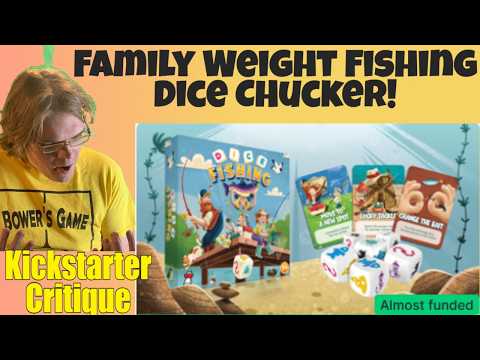
Now, if trading cards are the fast food of the gaming world—instant gratification, blinding foil, quick hits—then board games are the five-course meal you share with friends. The board game renaissance of the last decade has been wild. We’ve left behind the roll-and-move frustration of Monopoly and entered an era of cooperative storytelling and engine-building elegance. Take a game like Wingspan, where you’re just a bird enthusiast trying to attract the best avian friends to your preserve. There’s no combat, no backstabbing. It’s a gentle, beautiful puzzle where the components—pastel egg miniatures, a dice tower shaped like a birdhouse—are almost meditative. It sells out constantly for a reason.
The clever trick about modern board gaming is how it blends theme with mechanics so tightly you forget you’re doing math. In a heavy economic game like Brass: Birmingham, you’re building canals and railways during the Industrial Revolution. It sounds dry, but the night passes in a flash because you’re so absorbed in constructing your own little network while utterly ruining your friend’s plan to sell cotton. That’s the secret sauce: the narrative that emerges from the cardboard. You won’t remember the exact score three months later, but you will remember the turn where someone blocked your route to Liverpool and you had to pivot your entire strategy. Those stories become inside jokes that define friendships.
You’re probably wondering about the entry point. The barrier feels real, especially when you see games with a hundred miniatures and a rulebook the size of a novella. But here’s a little-known fact: the community is aggressively welcoming. Most local game stores have a library shelf where you can rent out a game for a few bucks or play it for free right there. They host learn-to-play nights where a guru will walk you through the setup without making you feel silly. I walked into one of those nights not knowing a meeple from a monopoly token, and within an hour, I was confidently placing workers in a stone age village. The tactile ritual of setting up a board—sorting the tokens, punching out the cardboard chits, shuffling the oversized cards—is a grounding act. It demands you put your phone down and engage your hands in a way screens can’t replicate.
Let’s bridge the gap between the two hobbies for a second. There’s a huge crossover that people often miss. Many board games are essentially trading card games in a box. Think about Dominion, the granddaddy of deck-building. You start with a pathetic little deck of coppers and estates, and by the end, you’ve crafted a sleek engine of chained actions. It gives you the same rush as drafting a perfect Magic: The Gathering cube, but everyone starts on equal footing from the same box. It’s a contained financial investment that scratches the same strategic itch. Then you have living card games like Arkham Horror: The Card Game, where campaigns evolve, your investigator gains trauma and upgrades, but you buy fixed expansions instead of randomized boosters. It’s the story depth of a board game with the portability and customization of a card binder.
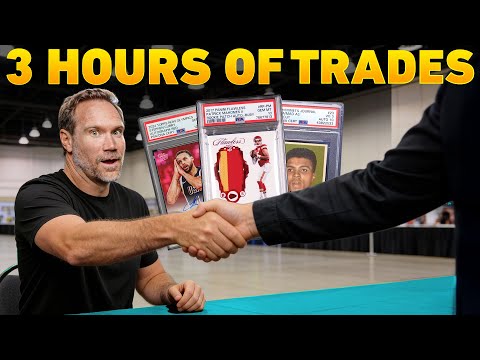
And speaking of financial investment, the trading card market is a beast of its own. It’s not just a hobby; for many, it’s a speculative asset class that wears a Charizard mask. You’ve got apps tracking real-time prices, grading companies like PSA and CGC that slab your cards in protective tombs, and auction records that make your head spin. But don’t let the money talk scare you off. The beauty of the game is that a ten-cent common can be just as beautiful as a thousand-dollar chase card. I keep a reverse-holo Voltorb in my wallet from a set fifteen years ago because the colors pop in the light. It’s worthless, but it makes me smile every time I see it. That’s the axis the hobby spins on: personal value versus market value. Some of the most passionate collectors focus on what we call “bulk”—random cards that remind them of a specific childhood Saturday.
If you’re leaning toward board games, the term “shelf of shame” is something you’ll quickly learn. It’s the stack of still-shrink-wrapped games you bought because the theme was irresistible or the component quality was too good to pass up. We’ve all got one. The trick is turning a Saturday afternoon into a mini-convention at your dining table. You don’t need a dedicated game room with a custom vaulted table (though if you have one, invite me over). You just need a flat surface, some snacks that don’t leave grease, and one other person who is willing to muddle through the first messy playthrough. The first game is always a little clunky, a little full of rulebook flips. That’s part of the process. By round three, you’re all moving like a well-oiled machine, and suddenly you’re trash-talking each other’s farming strategies in Agricola.
What ties these two worlds together is the ritual of the collection. Whether it’s a meticulously organized binder sorted by set number and artist, or a Kallax shelf stuffed with board games arranged by weight, the curation is meditative. It’s a physical library of potential experiences. When friends come over, they drift to the shelf, pull out a box, and read the back like it’s a book jacket. “You become a terrible monster trying to destroy Tokyo,” they’ll murmur, holding up King of Tokyo, and the night is decided. It’s a social lubricant that doesn’t require a bartender.
So grab a booster of whatever set has the prettiest logo. Pull out a box that has a little dust on it. Host that game night where you attempt to overthrow the Galactic Emperor or breed the fluffiest sheep. The table is ready, and the cards are waiting. Just shuffle up and draw.