







Stop Slouching: How Yoga & Pilates Posture Coaching Can Fix Your Desk-Body
If you've ever caught your reflection looking like a question mark or felt that nagging ache between your shoulder blades, you're not alone. Posture coaching through yoga and Pilates isn't about standing like a soldier—it's about retraining your body to move and rest without pain. Let me walk you through how it actually works, friend to friend.
You know that moment when you sit up "straight" for five seconds, then your shoulders creep back to your ears and your chin juts forward like a turtle? Yeah. That's not a willpower problem. That's your body doing what it's been trained to do after years of hunching over phones, laptops, steering wheels, and couches. Here's the thing: posture isn't a static position you hold. It's a dynamic relationship between your bones, muscles, and nervous system. And that's exactly where yoga and Pilates posture coaching gets fun.
I used to think good posture meant pulling my shoulders back so hard my chest stuck out like a proud pigeon. Then I worked with a coach who watched me stand and said, "You're not straight, you're just tense." She had me lie on a mat, breathe into my ribs, and suddenly my spine lengthened without me forcing anything. That moment changed everything. Posture coaching isn't about gripping your core or squeezing your glutes all day. It's about waking up the muscles that have gone to sleep and calming down the ones that are overworking.
So what does a yoga and Pilates posture coaching session look like? Imagine you show up with lower back pain and that classic "text neck" hump. A good coach won't just hand you a list of stretches. They'll watch how you stand, how you sit, how you breathe. Maybe they notice your pelvis tilts forward too much, which makes your lower back arch and your belly stick out. Or maybe your ribs flare up every time you inhale because your diaphragm forgot how to move properly. That's the detective work part.
Pilates is brilliant for this because it's all about precise, controlled movement with a focus on your deep core—the transverse abdominis, pelvic floor, and multifidus. Those muscles are like the guy wires of a suspension bridge. If they're weak or uncoordinated, your spine doesn't have the support it needs, so your big superficial muscles (like your lats and hip flexors) take over and get cranky. A Pilates-based posture coaching session might have you doing a simple pelvic tilt on the mat, but with your coach's hands guiding your ribcage to stay down. That tiny adjustment? It can unlock years of tension. You walk out feeling taller, but not because you're trying to be tall. You just gave your spine room to stack properly.
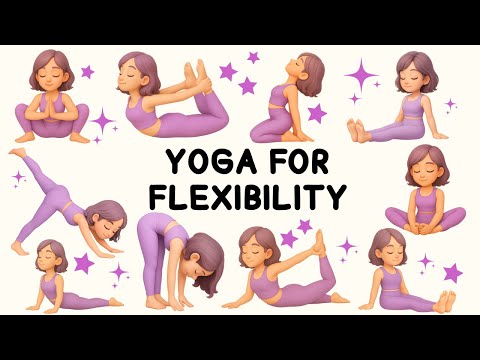
Yoga adds the missing piece: breath and mobility. Pilates strengthens your core, but yoga teaches your fascia and joints to move through full ranges without stiffness. Think about a pose like cat-cow. Boring, right? But when a posture coach cues you to initiate the movement from your tailbone, let each vertebra articulate one at a time, and sync it with your breath, suddenly it's not boring—it's a spinal massage. And that downward dog? It's not just a hamstring stretch. It lengthens your entire back line from heels to crown, creates space in your shoulders, and reminds your body what "long spine" feels like without gravity compressing you.
One of my favorite moments in posture coaching is when someone realizes their "bad posture" isn't a moral failing. It's a habit pattern stored in their nervous system. Your brain literally learned to hold you in a slumped position because that was efficient for sitting at a desk for eight hours. So the fix isn't just exercise—it's neurological retraining. That's why a good coach will have you practice tiny, frequent movements throughout your day instead of one big workout. A chin tuck while waiting for coffee. A shoulder roll at a red light. A standing hip hinge while brushing your teeth. Micro-movements rewrite the pattern faster than any marathon yoga class.
Let's talk about alignment, because that word gets thrown around a lot. Alignment in yoga and Pilates posture coaching doesn't mean stacking your bones like a Jenga tower and holding your breath. It means finding the path of least resistance where your joints are centered and your muscles can do their job without fighting each other. When your ankles, knees, hips, shoulders, and ears line up over each other, gravity becomes your friend instead of your enemy. You don't have to work so hard to stay upright. That's the goal—effortless uprightness. Not rigidity.
Breath work is the secret sauce. Shallow chest breathing pulls your neck muscles into overdrive and keeps your ribs locked up, which reinforces that slouched, compressed posture. Deep diaphragmatic breathing, the kind you learn in yoga and Pilates, gently massages your internal organs, lowers your stress response, and naturally decompresses your spine. A coach might have you place one hand on your belly and one on your ribs, then inhale into the back of your ribcage like you're filling a balloon inside your torso. Suddenly your shoulders drop, your chest opens, and your neck releases. That's posture coaching without a single crunch.
Here's a story: a client came to me complaining of constant headaches and tight hips. She'd been doing planks and deadlifts for years but always felt stiff. In our first session, I noticed she held her breath every time she tried to engage her core. Her abs were strong, but her diaphragm wasn't moving, so her pelvic floor was locked down and her hip flexors were screaming. We spent three weeks just breathing in different positions—lying on her back, on her side, in a gentle bridge. No planks, no stretching. Her headaches disappeared, and she gained an inch of height. Not because she grew bone, but because her spine finally had space. That's the power of yoga and Pilates posture coaching.
You might wonder if you need a coach or if you can just watch YouTube videos. Videos are great for learning exercises, but they can't see your compensations. A forward fold can stretch your hamstrings or it can strain your lower back depending on whether your pelvis tilts or your spine rounds. A side plank can strengthen your obliques or it can wreck your shoulder if your ribs dip. A coach gives you real-time feedback, adjusts your alignment, and helps you feel the right muscles working. That felt sense is gold. Once you feel what correct engagement is like, you can replicate it on your own.
So if you're tired of feeling like a crumpled receipt, try a few sessions of yoga and Pilates posture coaching. You'll learn to stand taller without strain, breathe deeper without effort, and move with more ease. Your future spine will thank you. And honestly, the confidence boost of walking into a room with an open chest and relaxed shoulders? That's worth more than any six-pack.